
September 29, 2025
Mind the Gap: Challenges for FY26 Funding for the Department of Health and Human Services
The largest non-defense spending bill, totaling over $200 billion in discretionary funding and over $1 trillion in mandatory funding, has gotten through House and Senate appropriations committees. The FY26 Labor-HHS-Education bill, which funds the Departments of Labor, Education, Health and Human Services, and other agencies, was approved by the Senate Appropriations Committee (SAC) on July 31 (S. 2587. S. Rpt. 119-55) on a bipartisan 26-3 vote. The House Appropriations Committee (HAC) completed its work on the bill five weeks later, on September 9, (H.R. 5304, H. Rpt. 119-271) with a partisan 35-28 vote, with only Republican support. This follows a pattern that we have seen for appropriations over the last several years, with the House marking up bills that the minority (in this case, Democrats) will not support due to funding levels and policy riders, and the Senate taking a bipartisan path from the outset. This approach works to move the bills through each body but makes conferencing them for final appropriations action difficult.
This bill also continues our bipartisan record by including a number of priorities from both sides of the aisle like, investments in America’s biomedical research, child care, education, mental and rural heath, and continued efforts to combat the opioid epidemic. I am pleased that this bill reflects many of the priorities that will help West Virginians from all corners of our state.
SAC Labor-HHS Subcommittee Chair Capito (R-WV),
July 31
HIGH-IMPACT AT FEDERAL, STATE AND LOCAL LEVELS
The LA-HHS-Ed bill accounts for nearly one-third of federal non-defense discretionary funding, with a large portion of the funding being grant money that makes its way to states, localities, universities and nonprofits. The HHS portion was about $115 billion in FY25. That funds all of the National Institutes of Health (NIH), the Centers for Disease Control and Prevention (CDC), the Health Resources and Services Administration (HRSA), the Substance Abuse and Mental Health Services Administration (SAMHSA), the Administration for Children and Families (ACF), the Agency for Community Living (ACL), program management and technology for Medicare and Medicaid (CMS), emergency preparedness under the Administration for Strategic Preparedness and Response (ASPR), and other activities. The FY25 bill also allows for the use of funding for IT and management functions for the Social Security Administration. Congress has found common ground in funding many health-related national priorities, in particular, the groundbreaking biomedical research at NIH and its Institute including the National Cancer Institute, and social services their constituents rely on. Controversy over COVID response and vaccines has eroded some of the support for this bill and made its path on the House or Senate floor unpredictable. For that reason, we do not expect either the House or Senate to consider this stand-alone bill on the floor this year.
RESPONSE TO TRUMP BUDGET CUTS
This year faces the additional challenge of a Trump Administration FY26 budget that cuts HHS funding by $32 billion, nearly 30% from the FY25 level. Budget data for FY25 and House funding levels are sourced from budget tables included in H. Rpt. 119-271, filed Sept. 11, as that is the most recent data available and provides a comparable base for Congressional action. Senate funding levels are as reported in S. Rpt. 119-55. References are to discretionary budget authority and do not include emergency spending or program integrity funds. As illustrated in Chart I on page 6, the administration proposes cuts to all HHS agencies, ranging from 2% to 100% (eliminating funding for the Agency for Healthcare Research and Quality (AHRQ)). The largest operating division, NIH, would see a cut of $17 billion, or 37%. CDC would see a cut of $2.9 billion, or 37%. The Trump budget cuts the ACF by $7.2 billion and HRSA by $1.9 billion. Neither the House nor Senate Appropriations Committee-approved bills accept Trump’s proposed HHS cuts. The Senate mark came in $34 billion over the Trump FY26 budget, although the SAC did mark several agencies slightly below their FY25 budget levels. However, overall the Senate increases HHS funding from FY25 to FY26 by $1.9 billion, or 2%.
The House FY26 level is $25 billion over the Trump budget; still the HAC did wield an axe on many programs, which the Democrats on the committee protested vociferously. The House committee decreased funding from FY25 levels for almost every HHS entity, ranging from a 1% cut to NIH (-$508 million), to a 24% cut to CDC. In total, the House mark cuts HHS by $6.9 billion, or 6% below the FY25 level.
The Committee is pleased to see progress towards the implementation of CDC’s data modernization efforts and encourages the agency to continue to invest in the five key pillars of data modernization: (1) electronic case reporting; (2) laboratory information management systems; (3) syndromic surveillance; (4) electronic vital records systems, and (5) the national notifiable disease surveillance system…[and report on] implementation of enterprise-level public health data systems.
H. Rpt. 119-271
SELECTED HOUSE AND SENATE IT DIRECTIVES
CMS Public Health and Data Modernization Initiative: The Senate includes $160 million in funding for CDC’s Public Health and Data Modernization Initiative through $10 million in appropriations and a $150 million transfer from a public health trust fund. The House includes $185 million from the fund.
IT Supporting Medicare and Medicaid, CMS Program Management. The Senate provides $3.7 billion for CMS program management, and the House $3.5 billion. Both make available over $1.9 billion in mandatory funding for state Medicaid grants and the Medicare trust fund. CMS program management funds information technology and beneficiary outreach for Medicare and Medicaid programs, and committees provide direction for CMS for program operations, claims processing, technical support and IT investments priorities.
The Senate includes direction for CMS to modernize Medicare’s fee-for-service claims portfolio the Senate also directs CMS to support state IT and data systems improvements, including improved use of AI, maintaining privacy and security, and upgrading capacity. The House addresses the administration’s use of AI in Prior Authorizations (a current Medicare pilot program) and directs the Government Accountability Office to study and report on the issue.
The House report asserts the need for CMS to further digitize its paper-based processes for both internal functions such as preventing fraud, waste, and abuse, and outward beneficiary and provider services.
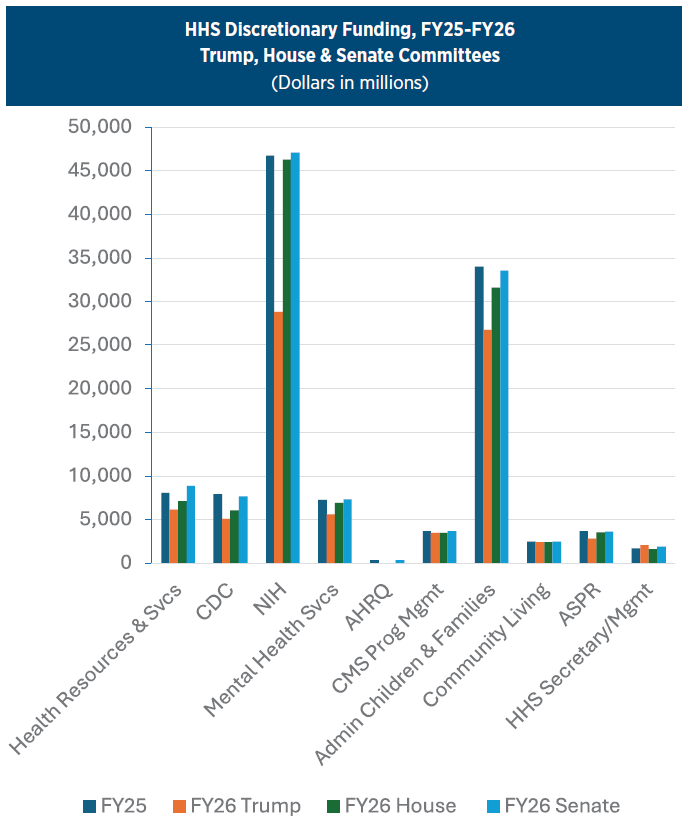
Chart I: Source: S. Rpt. 119-55; H. Rpt. 119-271, FBIQ
SOCIAL SECURITY ADMINISTRATION (SSA) INFORMATION TECHNOLOGY
The Senate bill contains $14.9 billion and the House $14.8 billion for an account to fund administrative and operational costs for Social Security programs and to support CMS in Medicare administration. According to SSA’s FY26 IT portfolio, about $2.6 billion is dedicated to supporting SSA information technology to review claims, process earnings information, conduct hearings, and program integrity. SSA IT plans lack specificity. Its two largest current initiatives are business resilience automation ($110 million) and to improve and integrate identity assurance across channels ($50 million). SSA states in its FY26 budget that “Our efforts in 2025 and 2026 contribute to our longer-term IT modernization strategy, which is under development.” The House report directs SSA to fully implement its Occupational Information System (OIS), and report on timeline and costs; to improve payment integrity through error identification and correction, and to develop new technology systems to assess and process disability claims.
The Senate directs the SSA to make progress on codebase modernization and migrating the outdated system to a modern programming language; to adopt digital identity authentication technologies to verify federal benefits; and to report on all grants and contracts in its IT portfolio.
CYBERSECURITY AND ARTIFICIAL INTELLIGENCE (AI), HHS-WIDE
The House suggests that HHS increase cybersecurity measures to strengthen its cybersecurity infrastructure against social engineering attacks that could affect grantees and the department, and to better protect the sensitive data held by HHS. The Senate report notes that $100 million is provided for HHS cybersecurity needs across the department. Both the House and Senate express support for innovation in use of AI in biomedical research and other use cases. The Senate directs the National Library of Medicine to “transform” from a data repository to a facilitator of researcher access to advanced analytics, including AI. To support this, NLM would need to develop a biomedical research data sharing network. The Senate provides $135 million to the Office of Data Science Strategy to expand AI, machine learning and data science use across the HHS research portfolio.
Every single FY26 appropriations bill has now been marked up and passed out of the Appropriations Committee – all 12 of them. Our cardinals and members have demonstrated responsible budgeting and principled decision-making while funding our nation’s most important needs. This gives us a strong negotiating position and keeps the FY26 process moving forward to deliver for the American people.
House Appropriations Chair Cole (R-OK), Sept. 16
OCTOBER’S OBSTACLE COURSE
Through the fall, there will be a huge challenge in coming to agreement on FY26 HHS funding, with multiple hurdles. First, how much money will there be to work out a deal? At $200 billion, the Labor-HHS-Education is so large that its funding levels for conference need to be determined first so that allocations can be figured out for the other non-defense bills.
Second, there are significant funding disparities between the House, Senate, and White House. Despite the House and Senate each rejecting the majority of the Trump HHS cuts, their bottom lines still differ by nearly $9 billion. Contributing to the gap is the Senate’s inclusion of $983 million in Congressionally directed spending for Senator’s priorities in four agencies (HRSA, SAMHSA, ACF and ACL); the House included no Congressional projects in their funding bill.
Third, there are policy riders on controversial topics such as transgender care and abortion that the House Republicans added to their Labor-HHS-Education bill, the House Democrats objected to, and the Senate avoided entirely.
Fourth is the broader issue of the Trump Administration holding back or cancelling appropriated funds, which looms over all appropriations actions. If the Executive Branch ignores the Legislative Branch, what is the remedy? The Vice Chair of Senate Appropriations Senator Murray (D-WA) and the Ranking Member of House Appropriations DeLauro (D-CT) developed a tracker to detail the over $410 billion they assert that the Trump Administration is withholding from FY25 funded programs, $23.7 billion of which are for HHS agency grants. Congressional Democrats have little incentive to endorse spending agreements if elements of those agreements can later be “canceled” unilaterally by the administration.
Despite these issues, House Appropriations Chair Cole (R-OK) sees a path forward. He touted his committee’s success (see text box) on the same day that he introduced a Continuing Resolution (CR) to keep the government open until November 20, which will be rejected by House Democrats, and may then stall in the Senate. But there is a chance it gets through, especially with the President’s support. If a CR passes the House and Senate, the appropriators will have until midnight on November 20 to work out all the deals needed for FY26, HHS included. That’s just two months away.