
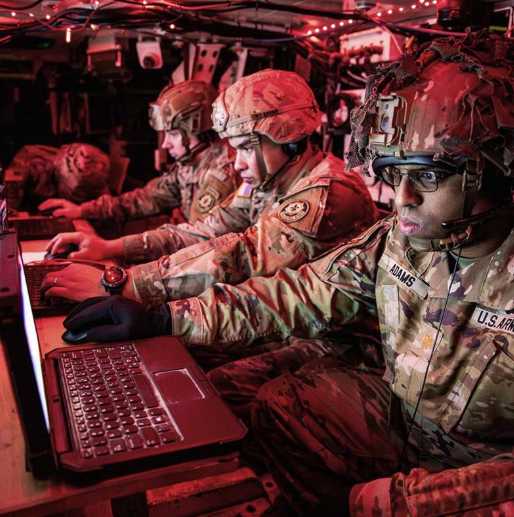
Today’s operating environment is changing with the addition of artificial intelligence, advanced communication networks and more data available than ever before to the warfighter. Speaking at the AFCEA’s TechNet Cyber Conference last month, Lt. Gen. Paul T. Stanton, the Department of Defense Cyber Defense Command Commander and Defense Information Systems Agency (DISA) director, emphasized a collaborative and team approach with industry to deliver warfighting capabilities, moving away from transactional relationships. He shared his four priorities to move DISA toward a collaborative culture – readiness, campaigning, continuous modernization and establishing lethality.
…we cannot seize the advantage without useful data.
DISA is the combat support agency responsible for operating and securing the department’s global network, secure information sharing activities, and providing foundational command and control. It provides and monitors the backbone for enterprise-wide systems, combat communications, classified communication and cloud computing for the DOD, Joint Force, and warfighter. Ensuring available and cyber hardened networks for data to flow across combatant commands area of responsibility, to include interfacing with allies is also a critical part of DISA’s mission.
IMPERATIVES
Last year’s DISA Next Strategy pushed the agency to modernize and operationalize data and the network it travels on throughout the global DOD enterprise. There are four overarching objectives tied to next generation technology, hybrid and joint systems and the workforce.
Operating and securing the DISA portion of the DOD Information Network (DODIN) is the first imperative. This includes services such as on-premises and cloud storage, applications, and application hosting. Enterprise and business tools to military services, combatant commands, agencies and activities — in other words just about all of DOD — are part of DISA’s responsibility. The data generated by these tools travels on the Defense Information System Network (DISN), a primary task performed by DISA.
The second aspiration is supporting strategic command, control and communications (C3). This broad category supports enabling electromagnetic spectrum access, securing mobile devices as well as voice and video, and continuity of government capabilities. The current cloud environment will adjust into a hybrid cloud and operationalized for expanded use of data in combat operations.
The third objective concentrates on network optimization with two main objectives. One, consolidating networks for the combatant commands and defense agencies and activities, allowing for enterprise-level solutions such as a consolidated cloud and shared services. Two, divest technical debt, eliminating material solutions that are subpar or maintained in lieu of a more efficient version. The push for removing legacy systems in the military services to use funding for more modern and efficient systems is certainly in line with this objective.
The final goal is to operationalize data, meaning “proactively collecting, storing, correlating and interpreting data — to generate information and knowledge that enables warfighters to make relevant and timely decisions.” DISA includes operationalizing their own data about the DISN to steer cyber forces and capabilities to points of need.
With the concepts and imperatives in place, modernizing and adapting systems by 2030 are the next step. They are a next-generation DISN; a hybrid-cloud environment; national leadership command capabilities; joint and coalition warfighting tools; consolidated network; zero trust tools, data management and the workforce.
BUDGETS
While strategy is important and guides an organization, implementation of DISA Next requires funding. Trump’s FY27 Budget requests $6.2 billion in discretionary and $16.4 billion in mandatory funding to start implementing DISA Next. The legislative process to enact mandatory funding is outside the regular appropriations process. The FY27 defense mandatory $350 billion budget request would be part of a third reconciliation package, with funding falling under the jurisdiction of the defense authorization committees. To date, there has been no legislation for Congress to consider.
Within the $350 billion defense mandatory request is $4.2 billion in DISA procurement dollars for Sovereign Artificial Intelligence, which is “the department’s strategic initiative to build and control a secure, government-owned and operated AI ecosystem.” Funding would be used to buy a “wide range of infrastructure needed to support the systems unique to AI technologies.” The $12.4 billion mandatory O&M request would “address the critical infrastructure capability gaps required to support Sovereign Artificial Intelligence across the DOW”. Critical deferred maintenance projects and Sensitive Compartmented Information Facility (SCIF) upgrades are also listed in the FY27 mandatory funding explanatory sentence.
The House Appropriations Committee fully funded the FY27 DISA discretionary funding request for all appropriations and increased research and development for mission partner expansion support by $39.2 million. The Global Command and Control System received full funding of $124.3 million, an increase of $79.8 million in FY27.
Procurement increases of note in FY27 are $140.3 million for DISN, with $55.5 million requested to address technical debt, and $485.9 million for White House Communications Agency (WHCA) to fix limitations in communications systems for WHCA and DOD.
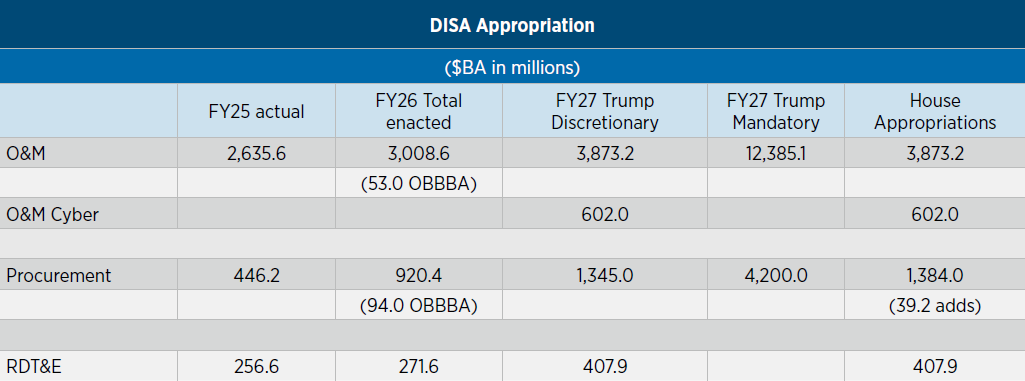
Chart I. Source: HAC, DOD budget documents, FBIQ
OPPORTUNITY AND RISK
As the US military becomes increasingly reliant on technology, secure and reliable communications and the systems through which data travels are critical to gaining a strategic advantage for U.S. Forces. With increased funding aligned to a strategy, DISA is ready to provide the technological environment needed to move data into the right hands for military success.
In this environment, requesting funding for a critical capability outside the appropriations process dramatically increases the risk that little if any of that funding is approved.