
August 17, 2026
House, Senate Pass Different Continuing Resolutions
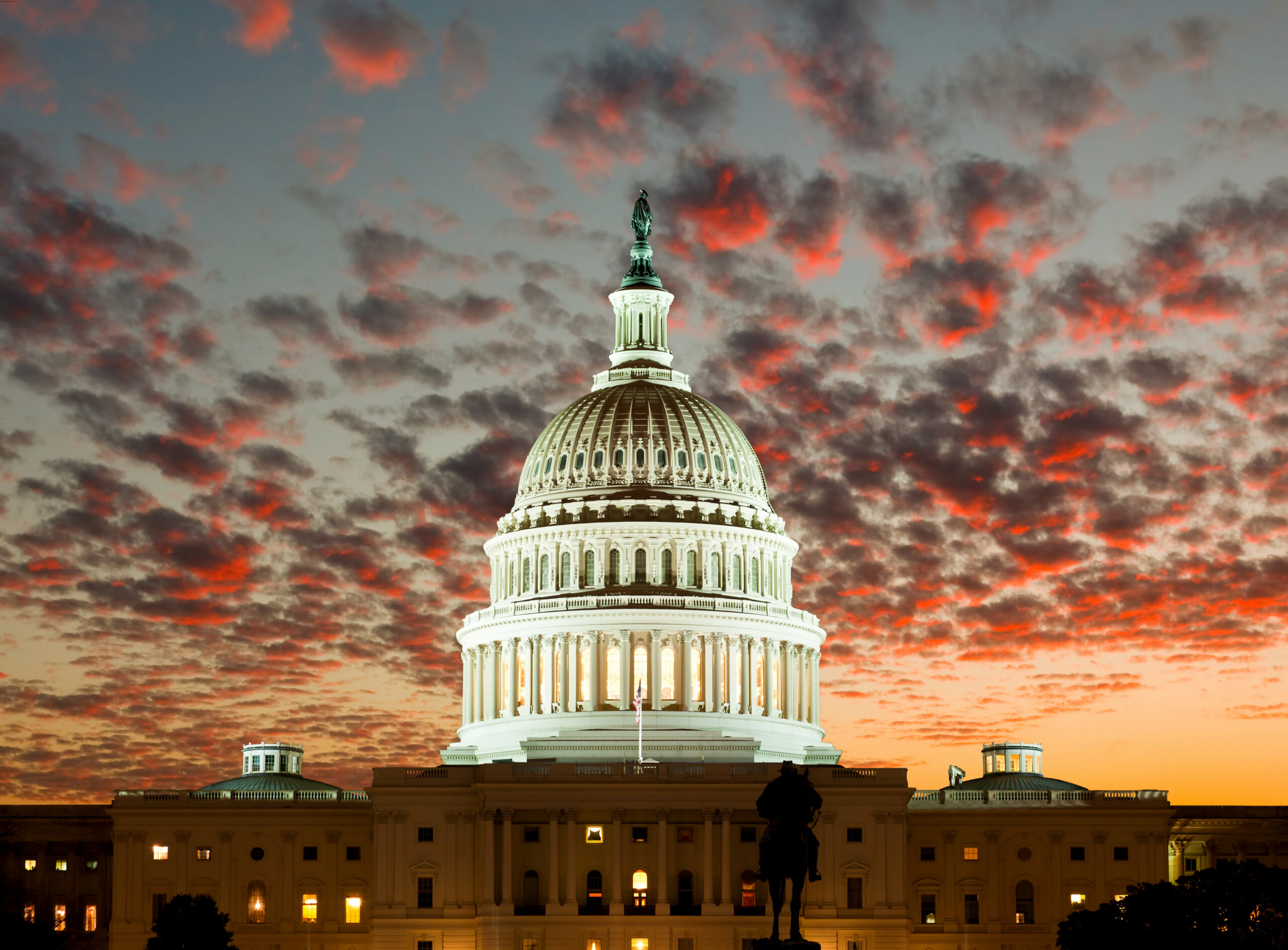
At 4:00 a.m. on August 8, the Senate voted 90-6 to pass H.R. 6500, a bipartisan bill making continuing appropriations for FY27, beginning October 1, 2026. On July 21, the House passed its version of the continuing resolution (H.R. 9700) on a partisan 220-205 vote. Neither the House nor Senate bills contain supplemental funding requested by President Trump for the war in Iran, for farm aid, or for disaster assistance. Nor do they include the President’s election reform language. The House and Senate versions of the continuing resolution (CR) have substantive differences that will need to be resolved when the House returns on August 31, and the Senate returns on September 14.
Too many members in Congress mistake a cliff’s edge for political leverage – and this bill refuses to reward those who depend on obstruction and chaos. Instead, it puts certainty and stability for the nation first.
House Appropriations Committee Chair Cole (R-OK), July 21
The House-passed CR funds all twelve bills at FY 26 levels from October 1 through December 4. The Senate bill does the same through December 11, 2026. As with past continuing resolutions, both versions prohibit virtually all new program and contract starts unless funding and authority were provided in FY26, entering multiyear contracts, or increasing production rates, for the duration of the CR.
There are a number of significant differences between the House and Senate bills. The House bill passed before the Office of Management and Budget (OMB) proposed anomalies to the current rate. The Senate included several of the OMB proposals that are expected to be non-controversial, as well as other anomalies, such as higher rates of obligation for housing assistance, USDA commodity supplemental food assistance, Navy shipbuilding, and veterans and health program extensions. Neither the House nor the Senate included OMB’s proposal to increase obligations for so-called Trump-class battleships by $1 billon, and to waive the 8.3% sequester of unobligated mandatory DOD funds from the One Big Beautiful Bill Act.
Two Senate changes could prove controversial in the House. The Senate struck a House provision that would have permitted Department of Homeland Security to transfer DHS funds to the Border Patrol. On May 29, OMB issued a Notice of Proposed Rulemaking (NPRM), that would empower senior political officials to cancel grants at any time for activities that they deem to be inconsistent with Administration policy, notwithstanding the recommendations of science-based or other non-partisan expert peer review panels. House Appropriations Committee Ranking Member DeLauro (D-CT), Senate Appropriations Committee Vice Chair Murray (D-WA), and Senate Appropriations Committee Chair Collins (R-ME) objected to the NPRM. The Senate-passed CR prohibits OMB from finalizing the rule through December 11, 2026.
On August 3, the Trump Administration stated that the President would sign the Senate version of the bill. When the House returns on August 31, it will need to decide whether to approve the Senate version without changes. If they insist on changes, they will have to wait until the Senate returns on September 14 to resolve differences.
A shutdown on October 1 is not likely. There is no political advantage to Republicans or Democrats in the House or Senate of a government shutdown four weeks before mid-term elections that have the potential to change control of the House and the Senate. President Trump is still a wild card. On July 13, President Trump asserted that there could be an October shutdown if Congress has not passed the SAVE Act (his election reform bill). The President is urging the Senate to eliminate the 60-vote filibuster threshold, so that it can pass the SAVE Act.
Only seven weeks remain in FY26. The House is expected to be in recess for three of those weeks and the Senate for four.
This is an important step forward to prevent a shutdown no one wants and provide the runway we need to negotiate funding bills in the months ahead, as we fight to rein in Trump’s corruption and make life more affordable for families back home.
Senate Appropriations Committee Vice Chair Murray (D-WA),
August 8
The House Appropriations Committee has reported all twelve FY27 bills, almost all on a partisan basis. The House has passed three of them (Military Construction-VA, Agriculture-FDA, and National Security-State). Few, if any, will be enacted into law by October 1.
The Senate Appropriations Committee has yet to take action on any of the FY27 bills. It is likely that the Senate Appropriations will make their draft bills public in September rather than actually meeting to debate and mark them up.
Leaders of House and Senate Appropriations Committee have argued that a CR through early December will buy them time to complete the FY27 bills.
However, progress prior to the election is not likely. Obstacles include:
- Lack of a topline spending agreement,
- The status of the war in Iran, the costs of the war in Iran, and whether Republican Leadership will choose to use the filibuster-proof reconciliation process to approve the President’s supplemental request;
- Uncertainty over the Congressional response to the President’s proposal to use reconciliation to enact a $350 billion increase for defense programs, and
- Objections to an Administration effort to allow senior political officials to cancel grants, notwithstanding the recommendations of peer review panels.
Last cycle we were successful in getting our appropriations bills passed and signed into law. I hope we can do that this time as well, and the additional time that the continuing resolution will give us should help bring that about.
Senate Appropriations Committee Chair Collins (R-ME),
August 7
The outcome of the election will have a significant impact on whether the FY27 bills will be completed by early December, whether action will be deferred until after the new Congress meets in January, or whether there is a shutdown in December.