
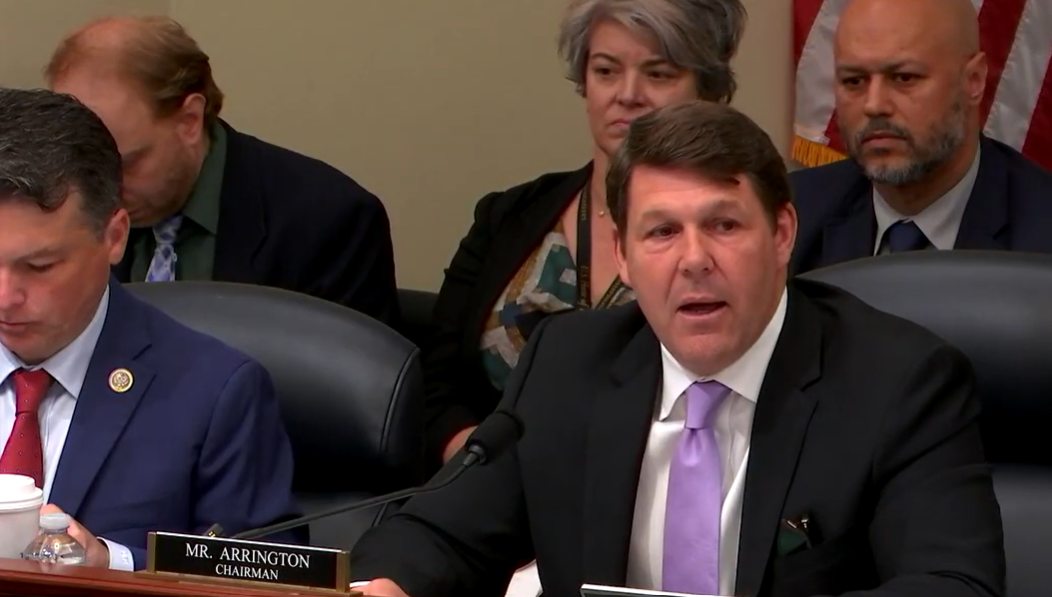
There are only ten weeks remaining before the beginning of FY27 on October 1 and Congress is expected to be on recess for five to six of those weeks. The House has passed only three of the 12 FY27 appropriations bills (Military Construction-VA, Agriculture-FDA, and National Security-State). Few, if any, of them will be enacted into law by October 1. The House Appropriations Committee (HAC) has reported all 12 bills, almost all on a partisan basis. The Senate Appropriations Committee (SAC) has yet to take action on any of them.
In the short-term, we expect the government to operate under a continuing resolution (CR) at FY26 funding levels from October 1 until at least early December. A government shutdown on October 1 is unlikely. The November election results could increase the risk of a December shutdown.
There is no political advantage to Republicans or Democrats in the House or Senate of a government shutdown five weeks before mid-term elections that have the potential to change control of the House and the Senate.
The Republicans have to do it (end the filibuster). Otherwise, we’re gonna have a shutdown in September.
President Trump,
July 13
President Trump is a wild card. On July 13, President Trump asserted that there could be a shutdown at the end of September if Congress has not passed the SAVE Act (his election reform bill). The President is urging the Senate to eliminate the 60-vote filibuster threshold, so that it can pass the SAVE Act.
There are numerous impediments to making progress on the FY27 bills, including:
- The lack of a topline spending agreement;
- The status of the war in Iran, the costs of the war in Iran;
- Uncertainty about how Congress will consider the President’s proposal to use reconciliation to enact a $350 billion increase for defense programs;
- On July 15 the House added the text of the SAVE Act to the National Security-State appropriations bill; and
- Objections to an Administration effort to allow senior political officials to cancel grants, notwithstanding the recommendations of peer review panels.
SPENDING TOPLINES DISAGREEMENT
Congress did not enact a budget resolution for FY27 (the deadline was April 15). Therefore, there is no topline agreement on defense and non-defense discretionary spending. The President’s FY27 Budget (submitted in early May) exacerbates that problem. The President proposes a 42% increase in national security programs (from $1.058 trillion to $1.504 trillion) and a 10% cut in non-defense programs from $733 billion to $660 billion), including deep cuts in education, housing, public health, foreign assistance, the environment, and science and technology programs. The President proposes that $350 billion of the defense increase will be enacted through a separate reconciliation process.
The HAC-approved FY27 defense bills total $1.14 billion (plus 8%), roughly equal to the President’s request (minus the $350 billion increase in reconciliation funding). Non-defense programs are reduced by $13 billion (2% below FY26), rather than the 10% cut proposed in Trump’s FY27. SAC Chair Collins (R-ME) and Vice Chair Murray (D-WA) have been unable to reach a topline agreement.
IRAN WAR AND ASSOCIATED COSTS
Recent developments in the war in Iran complicate matters. On July 14, the Senate defeated the cloture vote to take up the National Defense Authorization Act (NDAA). Historically, the NDAA is a bipartisan measure, but Senate Democrats are objecting because there has not been a vote to authorize the use of force in Iran.
Nor is there clarity on how Congress intends to respond to the President’s June 24, 2026 $87 billion supplemental request. The President is seeking $67.1 billion for DOD for Iran war and related costs, $11.1 billion for USDA for farm economic and disaster assistance, $0.8 billion for Iran war related costs of DOE, $2 billion for the Coast Guard for Iran war and Western Hemisphere drug enforcement costs, $3.3 billion for State Department embassy security and Ebola response, and $3 billion for other purposes. SAC has scheduled a July 21 hearing with Defense Secretary Hegseth and USDA Secretary Rollins on the request, but neither House nor SAC has scheduled action on the request.
This uncertainty makes it even more unlikely that the House and Senate will enact a third reconciliation bill before the election. On July 16, the House Budget Committee voted along party lines, 20-14 to approve a budget resolution that includes instructions for authorizing committees to mark up a reconciliation bill containing $95 billion, primarily for defense and intelligence ($73 billion), farm aid ($12 billion), and election reform ($10 billion). This resolution would allow House Republicans to use the reconciliation process to enact the Iran war supplemental rather than through the appropriations process and to delay or forgo using reconciliations for the $350 billion increase in defense spending. No Senate Budget Committee action has been scheduled on these issues.
We do not expect Congress to complete action on the FY27 Defense appropriations bill before the Iran war supplemental and the future of the President’s proposed $350 billion Defense spending increase though reconciliation are resolved.
President Trump launched a reckless and costly war with Iran—without authorization from Congress or the support of the American people—that he should never have started, and now, instead of doing anything to help families get by, he is asking taxpayers to pick up the tab.
Senate Appropriations Committee Vice Chair Murray (D-WA),
June 24
CANCELING GRANTS BY SENIOR POLITICAL OFFICIALS
Finally, on May 29, OMB issued a Notice of Proposed Rulemaking (NPRM), that would empower senior political officials to cancel grants for activities that they deem to be inconsistent with Administration policy, notwithstanding the recommendations of science-based or other non-partisan peer review panels. HAC Ranking Member DeLauro (D-CT), SAC Vice Chair Murray, and SAC Chair Collins have all raised objections to the NPRM, making progress on non-defense bills more difficult.
A POTENTIAL PATH FORWARD
We do not expect Congress to complete action on the FY27 Appropriations bills before the November elections.
The Senate could pass the FY27 Military Construction-VA bill before the August recess and use it as the legislative vehicle for a short-term continuing resolution (likely October 1 through early December) and for some portion of the Iran war supplemental. The House may kickstart the process by drafting a CR next week.
Graham’s Death & Reconciliation 3.0
Senator Lindsey Graham’s (R-SC) unexpected death on July 11th further complicates Republicans’ efforts to enact a third reconciliation bill. His replacement, Senator Darline Graham Nordone (R-SC) was sworn in this week, so Republicans regain a 53-47 majority.
Graham chaired the Senate Budget Committee, a key position on generating a third reconciliation bill and steering it through an expedited but cumbersome process. His likely successor, Senator Johnson (R-WI), is more of a deficit hawk than a defense hawk. Johnson faces daunting challenges on delivering a third reconciliation bill including a limited number of scheduled in-session days remaining this year and lack of consensus among Republicans in what should be included in Trump Administration-backed $350 billion reconciliation bill for defense.