

On June 27, the Centers for Medicare and Medicaid Services (CMS) announced a six-year plan to model the use of “enhanced technologies” to review prior authorization requests for Medicare fee-for-service patients. The plan, termed the Wasteful and Inappropriate Services Reduction (WISeR) model, is geared toward reducing waste in Medicare by focusing on the step at which providers submit a request for prior authorization (PA) or a pre-claim review for future medical procedures. The full announcement is included in the Federal Register of July 1.
CMS is committed to crushing fraud, waste, and abuse, and the WISeR Model will help root out waste in Original Medicare. Combining the speed of technology and the experienced clinicians, this new model helps bring Medicare into the 21st century by testing a streamlined prior authorization process, while protecting Medicare beneficiaries from being given unnecessary and often costly procedures.
CMS Administrator Oz,
June 27
Scope and Timing: The model’s technologies for PA or pre-claim review are expected to include Artificial Intelligence (AI) and Machine Learning (ML) in evaluating referral requests. Several companies, referred to as “model participants” will be chosen, one for each assigned geographic area. The Federal Register notice lists six states to be included: New Jersey, Ohio, Oklahoma, Texas, Arizona, and Washington, each within one of four current Medicare Administrative Contractor (MAC) jurisdictions. CMS says that additional participants may be added as the program evolves.
A Fact Sheet on the WISeR model includes important implementation dates, with a July 25 deadline for applications by companies interested in participating; the start of the program is anticipated January 1, 2026, with two three-year performance periods that run through December 2031.
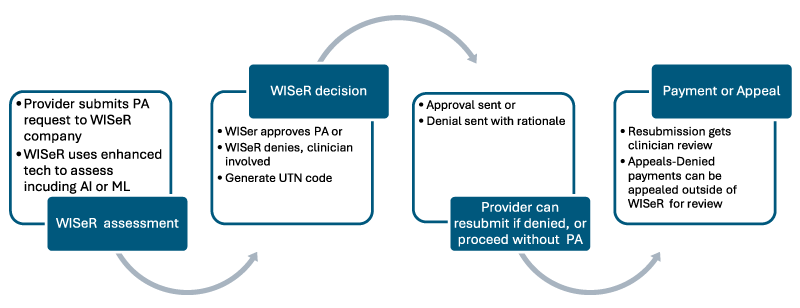
Figure I. WISeR process. Source: FBIQ, CMS
Task: WISeR will review prior approval requests and make a recommendation to approve or deny the request. The process is explained in Figure 1. CMS states that federal law requires denials to be reviewed by a health care professional and says that safe-guard process will be followed. The process will allow for resubmission of denied requests and appeals for nonpayment of claims, similar to the current process.
CMS privacy and security policies, including HIPAA, will be in effect for the model participant companies, and will govern the data sharing and business agreements of businesses participating in WISeR.
Criteria and Evaluation: Prior approval/pre-claim reviews will be limited to cases connected to 17 types of conditions or procedures, including those related to nerve stimulation, cervical fusion, incontinence, and various skin and tissue substitutes. WISeR excludes inpatient-only services, emergency services, and services that could cause harm by a substantial delay. In the June 26 Request for Applications (RFA), CMS explains that the subset of conditions were chosen for several reasons, including: complementary to existing Medicare PA requirements; sufficient dollar value or volume to be impactful; known source of potential waste or considered “low-value” care; services “amenable to automation” needing less medical review; and “targeting services with the highest impact to produce cost savings.”
CMS will be looking for applicants with both AI/ML expertise and health care claim and authorization experience. CMS does not require a specific technology but asks for information about the company’s experience in AI training on complex data sets, medical determinations, and the training of data sets that underlie the model. In addition, applicants need to describe the AI algorithm and framework that would support the WISeR model, their experience with electronic health records and the CMS MACs, and their model verification and validation to be used to “ensure ethical and high-quality utilization management metrics are met.”
For the companies selected as WISeR model participants, CMS will conduct regular audits and measure volume, processing time, and decisions; frequency and outcomes of resubmissions; documentation, billing and appeal claim denials, and the outcomes of such appeals. CMS will also “monitor broad clinical outcomes” for patients in the WISeR model, including near and longer-term quality measures; use of alternative procedures, adverse events, hospitalizations, and mortality.
The WISeR model’s theory of change is that the implementation of prior authorization and prepayment review for selected items and services, performed by a third party (leveraging enhanced technologies) operating under a set financial arrangement can facilitate the navigation of beneficiaries away from low-value and other wasteful services.
CMS RFA,
June 26
Payment: CMS’ WISeR RFA highlights an unusual payment model—companies will be paid a percentage of the amount that they reduce Medicare costs. Specifically:
“Payments to the model participants would be based on demonstrated reductions in spending for medically unnecessary or non- covered items or services as defined by Original Medicare local or national coverage policies, calculated as a percentage of the savings directly attributed to their model participation.”
Context: Administrator Oz stated that the model will both streamline the PA process and avoid unnecessary medical procedures or appointments. A harbinger of the WISeR project was included in Project 2025’s published plan, Mandate for Leadership, which cited Medicare and Medicaid as the leading causes of the nation’s deficit, stating: “In essence, our deficit problem is a Medicare and Medicaid problem.” One of Project 2025’s four Medicare reform goals is “Reduce waste, fraud, and abuse, including through the use of artificial intelligence for their detection.”
Expansion: Looking beyond Medicare, the Project 2025 blueprint also included recommendations to use technology to assist in uncovering waste, fraud, and abuse in the Supplemental Nutrition Assistance Program (SNAP), Medicaid, immigration applications, and block grants including Department of Justice programs. In Congressional hearings and budget documents, several Cabinet Secretaries have affirmed use of enhanced technology, using AI or other automation, to find waste, fraud, or abuse in programs.
Other anticipated uses of AI are directed to efficiency, such as improving the Internal Revenue Service based on Project 2025’s assessment that its “matching and detecting algorithms are antiquated.” Increased automation is also called for within the Department of Veterans Affairs to use “technology to do most of the work” to process veterans benefits claims. To that end, the President’s FY26 VA budget fully supports Automated Decision Support (ADS) in VA, stating “while VBA employees make all decisions, ADS reduces manual tasks and speeds up the process, allowing for more claims to be handled, especially for newly eligible Veterans.” VA’s FY26 goal is to increase Automated Decision support for compensation claims from 15% to 90%.
OUTLOOK
Whether termed AI, ML, automation, detection algorithms, or enhanced technology, the administration is looking to integrate AI and related technological approaches into the core of government analysis, decision making, and evaluation. Critics are concerned about AI use and controls, including decisions that bypass human analysts, lack of transparency about the AI software itself, and independent evaluation. Despite those concerns, we expect the Trump Administration to move fast with groundbreaking pilots and models to be launched for outward-facing government services and to support internal government operations such as trade analysis and supply chain vulnerability assessments from the closing quarter of FY25 into FY26.