
October 27, 2025
What’s Next: Federal R&D Priorities for FY27

On September 23, Office of Management and Budget (OMB) Director Vought and Director of Science and Technology Policy (OSTP) Kratsios issued a joint Executive Branch memo (Memorandum M-25-34/NSTM-2) to heads of government agencies and departments, setting federal research and development priorities for FY27. The co-authors state “federally funded R&D must focus on targeted, transformational investments in areas such as artificial intelligence (AI), quantum science, nuclear energy, biotechnology, national security technologies, and ambitious space exploration.”
The R&D Memorandum sets five government-wide R&D budget priorities and highlights five separate cross-cutting principles that underpin the science goals. The R&D budget priorities and sub-priorities are illustrated below in Chart I. The first and most detailed budget priority is for the U.S. to lead in “key critical and emerging technologies,” which are explained as AI, quantum information science and technology, advanced communication networks, future computing technologies, semiconductors and microelectronics, and advanced manufacturing.
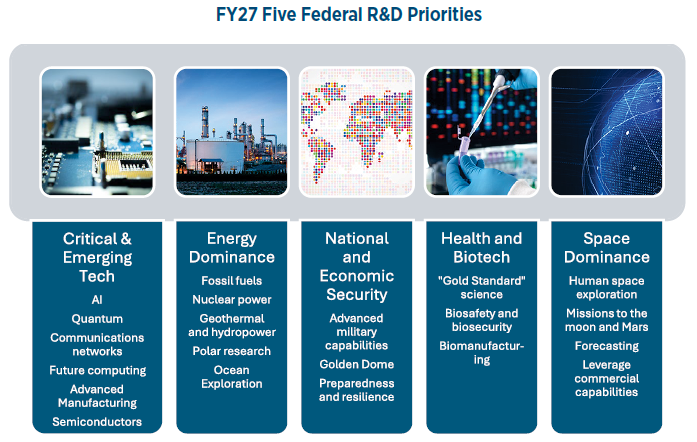
Chart I: FY27 Five Federal R&D Priorities
Within the first goal, AI is highlighted, as it has potential to advance R&D across many government disciplines and industrial sectors. For basic research, the administration plans to use AI in architecting systems, developing high-performing and data efficient foundations, supporting controllability and steerability, and designing robust, resilient and secure government systems. Applied uses should include accelerating discovery, nuclear power support, quantum information science, navigation, and remote sensing. OMB/OSTP are also looking for tested datasets for AI model training and improved methodologies for AI evaluation.
Agencies are directed to improve Quantum S&T by advancing basic science efforts, supporting maturation of quantum enablers, and better end use understanding. In this area, funding for consortia and pre-competitive R&D is highlighted as a foundational need. To support Advanced Communication Networks, agencies are instructed to do basic research in 5G, 6G, and space-based communication networks, and to employ AI to incorporate security by design.
Future Computing Technologies include enabling edge computing and end-to-end application workflows. Investments should include testbeds, experimental systems and prototype support, and agencies are directed to look toward opportunities for public-private partnerships, through centers of excellence, consortia and the like. The Memo also directs investment toward Advanced Manufacturing, both for manufacturing methods and manufacturing efficiency using digital twins, AI and other methods, to speed the time from discovery to use. Finally, funding for Semiconductor and Microelectronics is encouraged as it is foundational to AI and quantum use, and necessary for supply chain security.
Underlying each of the priorities is the framework, or research ecosystem, that is created from a partnership with the federal government, academia, industry and nonprofits. The memo states: “Across this ecosystem, it is the role of the Federal Government to set clear priorities, align incentives, and ensure that public investments translate into strategic advantage.” The memo delineates important roles for government partners:
- Private industry is cited for conducting applied research, turning basic research into products with speed and ability to scale, and general commercialization.
- Academia is noted for scientific discovery and workforce development, and nonprofits for piloting collaborative and creative approaches. Several of the research priorities include references to specific partnerships that the federal government will seek in that area.
- Selected highlights within the remaining R&D priorities include:
- Energy Dominance includes ability to collect and use large amounts of data related to energy use, consumption, and storage; research investments in the Arctic to maintain the infrastructure and understand and predict biologic and geological trends; mapping oceans and sea beds, and manage and assess large volumes of data.
- Strengthening American Security includes preparedness and resilience for natural disasters, with the memo directing R&D investment to anticipate and respond to natural disasters in partnership with state and local entities. OMB/OSTP continues with a very broad charge for investments in data and coordination to support disasters of all Specifically, the directive calls for R&D funding for risk-based “integrative approaches across threat and hazard domains, including cyber and electromagnetic attacks on critical infrastructure, supply chain weakness, power grid vulnerabilities resiliency, airspace threats, biological threats, severe terrestrial and space weather, and other geophysical hazards.” This will cover a lot of territory, covering functions in almost every federal department.
- For American Health and Biosecurity, the ability to detect and respond to biological threats is foundational. OMB/OSTP also calls for resources to support biomanufacturing that will secure supply chains and build a new manufacturing The memo also directs investment to support innovation in modular and scalable platforms that can bring biological products to market.
CROSS-CUTTING PRINCIPLES
The Trump FY27 budget will rack and stack R&D resources in the five priority areas. However, the OMB/OSTP memo also lays out five cross-cutting principles, as seen in Chart II, which focus on the way to do science across government rather than specifically connecting to agency funding lines or research plans. The most prominent of the five is the direction to implement “Gold Standard Science” as defined in President Trump’s May 23 Executive Order 14303 and the follow-up June 23 OSTP memorandum, NSTP-1, “Agency Guidance for Implementing Gold Standard Science in the Conduct & Management of Scientific Activities.” Agencies are required to report on their adherence to the E.O. and the OSTP guidance and provide implementation plans on their websites. As examples, the August 22 Department of Energy plan is here and the August 22 Department of Defense plan here.
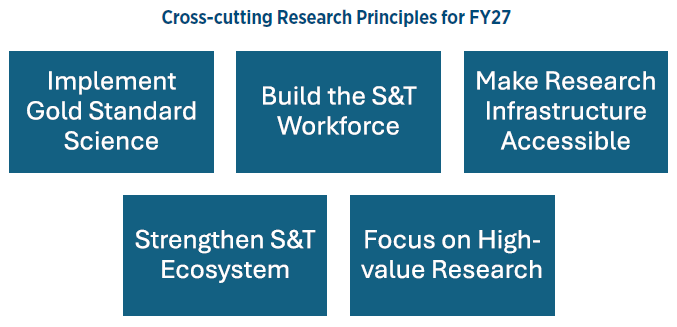
Chart II: Cross-cutting Research Principles for FY27
The additional cross-cutting principles include building the S&T workforce, for which agencies are directed to support STEM students, provide all Americans with access to STEM education and workforce development, and use technology to support teachers and students. The next action is a call for agencies to make their full research infrastructure available to support advanced R&D, including access for students to fabrication facilities, data infrastructure and computation, testbeds, prototypes and research stations. Third, all federal entities are directed to “revitalize and strengthen” the S&T ecosystem. This includes a myriad of actions, such as innovative funding ideas, sharing infrastructure, lightening regulatory and administrative burdens for tech transfer, increasing collaboration, and better protecting national security R&D. The final cross-cutting action is to focus on “high-value” R&D, or the projects that are focused on the core agency mission and more likely to produce meaningful outcomes for the government and American people.
For the purposes of this order, Gold Standard Science means science conducted in a manner that is: (i) reproducible; (ii) transparent; (iii) communicative of error and uncertainty; (iv) collaborative and interdisciplinary; (v) skeptical of its findings and assumptions; (vi) structured for falsifiability of hypotheses; (vii) subject to unbiased peer review; (viii) accepting of negative results as positive outcomes; and (ix) without conflicts of interest.
– E.O. 14303, May 2025
OBSTACLES
The timing of the guidance, issued September 23, is problematic. First, per the August update to OMB Circular A-11, initial budget submissions were due to OMB September 8. In the past, OMB issued R&D guidance before the budget due date, not after, so that agencies could incorporate R&D priorities into their decisions. Second, budget preparation and review are no doubt behind schedule due to the government shutdown. Between now and mid-January departments and OMB/OSTP will discuss review, modify, and approve final R&D budget requests.
WHAT TO WATCH FOR: THE FY27 BUDGET
The R&D memo is official guidance to shape R&D budget formulation for FY27. As such, it does not set R&D funding targets for Department and agency heads, nor does it direct specific funding amounts, marks, or details by research area, government function, department or agency. But the rubber hits the road around February 2026 when President Trump’s FY27 Budget is sent to Congress. Though due in February, there’s a good chance it will be late. At that point, if the administration includes standard R&D summaries in its budget presentation, we can evaluate how each of these R&D budget priorities have been funded, in which agencies, and with which partners.
However, we can clearly see market signals for the Trump Administration’s R&D plans via the memo. As part of the process, every agency requesting R&D funding will be asked to align their request with the five R&D categories and subcategories to justify funding; to specifically address use of partnerships (industry, academia, nonprofits); and to demonstrate their support for the five cross-cutting principles—in particular, Gold Standard Science. Aligning to these R&D budget priorities and cross- cutting areas will be advantageous to federal partners preparing for FY27 and beyond, since the R&D priorities are likely to endure through the rest of Trump’s term.