
October 29, 2025
DOD Increasing C3 Efforts but Unified Network Still Elusive
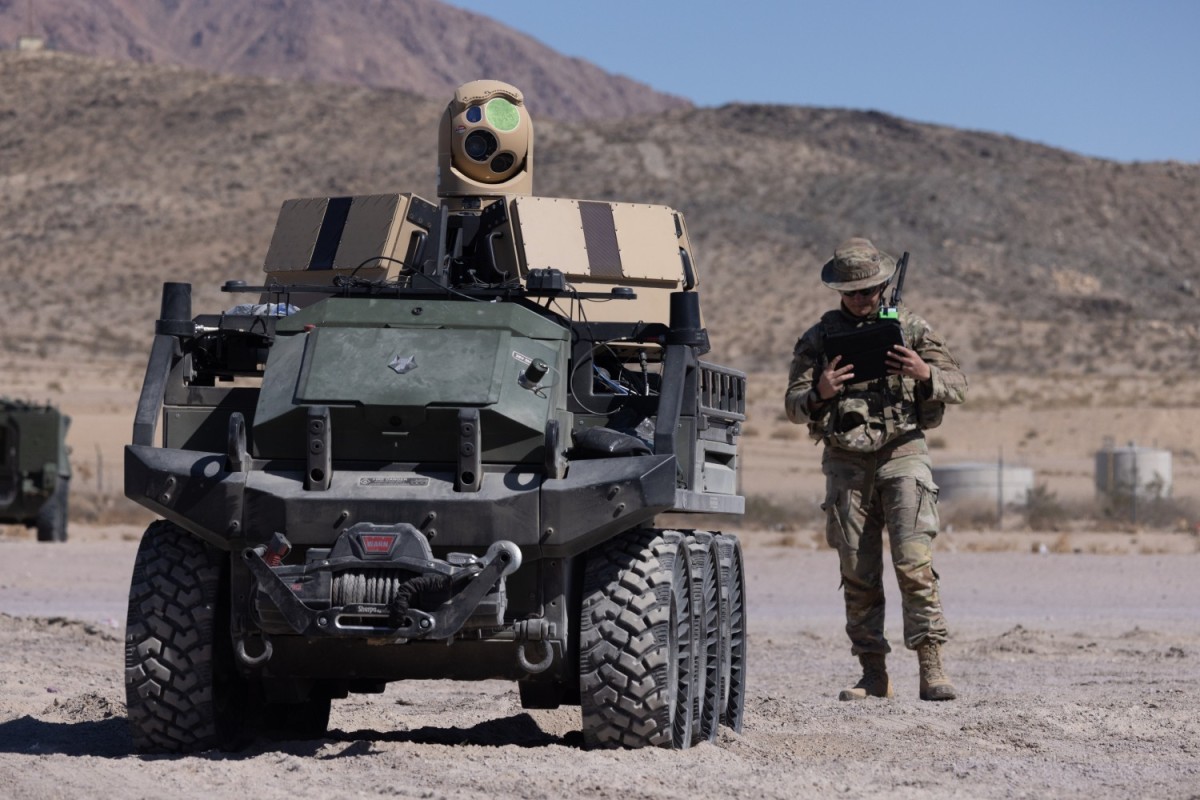
Today’s battlefield is increasingly populated with autonomous systems, sensors, and AI-enabled decision-making tools. Too often, these complex systems rely on legacy networks while operational requirements demand the ability to function in distributed, denied, intermittent, and latent (time delayed) signal environments. Command, Control, and Communications (C3) has never been more important or more vulnerable in the modern era.
The ability to sense—and make sense of—ubiquitous, ephemeral, and large volumes of dynamic data collected via exponentially expanding endpoints is central to modern warfighting, and something the Department of Defense (DOD) has struggled with for decades.
Recent policy initiatives and program investments across the Department indicate progress, but significant work remains across each of the military services, combat support agencies, and combatant commands.
POLICY FRAMEWORK
The just-released memo “Fiscal Year (FY) 2027 Administration Research and Development Budget Priorities and Cross-Cutting Actions” from the White House’s Office of Science & Technology Policy and OMB provides the policy framework for advanced communications networks and future computing technologies. It outlines three specific focus areas, Artificial Intelligence, “Advanced Communications Networks,” and “Future Computing Technologies.”
The memo pushes advanced communications technologies such as proliferated space-based communication networks, AI techniques to optimize networks and cybersecurity as well as emerging technologies for future computing including data resources, “from exascale to edge.” Additional AI-centric emphasis points include, “AI architectural advancements; data-efficient and high-performance AI techniques and systems; the interpretability, controllability, and steerability of AI systems; and AI adversarial robustness, resilience, and security.”
Within the memo, Defense areas and equities are further expanded upon within two specific sections; “Advanced Military Capabilities,” and “America’s Golden Dome.”
It notes that, “Agencies should advance R&D for AI enabled intelligence collection, surveillance, and reconnaissance, to enable enhanced decision-making and situational awareness across all domains. Future military space architectures should focus on R&D for new and enhanced national security capabilities for the warfighter that are autonomous, automated, and deliver decisive advantage in conflict, such as ubiquitous sensing and communications, trusted space autonomy, and tactically responsive space.” And further — that agencies should invest in critical capability needs to support the President’s vision for homeland missile defense as outlined in the Golden Dome for America initiative, including, “the S&T underpinning sensing and sensemaking, trusted autonomy, space maneuverability, directed energy, advanced materials, and affordable scalability,” and, risk reduction, capability enhancement, and dual-use applications for Golden Dome.
For the Department of War and the military services, these policy initiatives build on recent (and in some instances, decades-long) network and integration efforts.
Significant and specific funding allocations and capabilities included in the One Big Beautiful Bill Act (OBBBA) include:
- $2 billion for Defense Innovation Unit, scaling of commercial technology for military use.
- $400 million for the development and deployment of the Joint Fires Network and associated joint battle management capabilities.
- $300 million for the procurement of mesh network communications capabilities for Special Operations Command Pacific.
- $125 million for the development, procurement, and integration of military space communications.
- $124 million for mission networks for United States Indo-Pacific Command.
These allocations reflect Defense priorities to counter China, defend the homeland, and enhance space-based capabilities; and provide supplemental funding to several existing programs already underway across the military services and with DOD innovation hubs such as the Defense Innovation Unit (DIU).
ARMY
As part of its broad transformative initiatives, the U.S. Army is prioritizing modernization of its network and command and control (C2) capabilities, with estimated investments approaching $3 billion for the integration of next-generation systems. This strategic direction stems from the May 2025 “Army Transformation Initiative” letter to the force among other top-down directives. During June testimony before congressional defense committees, Secretary of the Army Driscoll emphasized the critical importance of advanced networks and communications to the Army’s future warfighting ability:
“First and foremost, we are investing in our Network. Leaders must be able to see the battlespace and effectively make decisions while staying mobile and keeping a low profile on the electromagnetic spectrum. C2 Fix which accelerates modernization of our existing systems, is already helping to make our teams more lethal and more mobile. Next Generation C2, the next stage in our transformation, will allow leaders at the Corps level and below to synchronize all elements of combat power.”
These programs and others build on Army experiments and field demonstrations as part of the most recent Project Convergency Capstone 5 which showcased three operational vignettes designed that highlighted the importance of data-driven decision- making.
SPACE-BASED INITIATIVES
Space programs including networks and C2 initiatives for the U.S. Air Force and Space Force are reflected most recently in the Department of the Air Force “Network of the Future Strategy,” signed in August 2025 by the Department’s Chief Technology Officer. The strategy outlines 6 key objectives designed to enable, “ubiquitous connectivity across the edge continuum,” and “improve the “user experience at every touch point to empower mission success.” The objectives are to:
- Bolster network resilience: Modernize transport methods and routing to ensure flexible data movement in the face of high network demand.
- Increase operational scalability and flexibility: Enable adoption of commercial technology to increase flexibility and speed of deployment.
- Secure the network of the future: Strengthen cybersecurity posture by integrating dynamic access into network architectures.
- Streamline network management: Increase uniformity and availability to meet growing demand in a way that lowers cost and reduces tech debt.
- Integrate the network Enable interoperable networking and communications for all missions, anytime, anywhere.
- Enable the workforce of the future. Our competitive edge relies on both the Network of the Future and the readiness of our workforce.
The strategy addresses and seeks to incorporate emerging technologies such as advanced mesh networks, flexible architectures to support future missions, and future-proofing security via cryptographic agility that can “defend against advanced technological threats such as quantum computing.”
MARINE CORPS EFFORTS
The U.S. Marine Corps has also increased emphasis in these areas with the recent establishment of “Project Dynamis.” In a September 10 memorandum, Assistant Commandant of the Marine Corps, General Mahoney, formally establish Project Dynamis, an initiative “to accelerate the modernization of Marine Corps contributions to Combined Joint All-Domain Command and Control (CJADC2) in partnership with the Department of the Navy’s Project Overmatch.” Goals include developing “end-to-end, joint interoperable capabilities that enable Marines to act as the forward element of the Joint Force—sensing, making sense, and communicating weapons quality data at the speed and scale of relevance.” The project will be overseen by a “3-star council” which includes the Deputy Commandant for Combat Development and Integration (DC CD&I) and the Deputy Commandant for Information (DCI).
ACCELERATING LESSONS LEARNED FROM THE WAR IN UKRAINE
While details for the $2 billion in OBBBA funding for DIU are not yet available, a recent commercial solutions opening called Project G.I. highlights efforts to capture lessons learned from the battlefield of Ukraine and DOD’s requirement to manage uncrewed systems at scale. “DIU and its DoD partners seek “ready-now” uncrewed systems (UxS) solutions to enhance the speed and lethality for small, dispersed targeting-strike cells operating under Denied, Disrupted, Intermittent, and Low-Bandwidth (DDIL) conditions. Solutions should fundamentally improve how tactical formations sense, decide, and strike, independent of consistent communication or extensive logistical support.” Technologies and solutions specifically called for include uncrewed aerial systems (UAS), electronic warfare (EW), and uncrewed ground vehicles (UGV).
While the Department of Defense/War has long recognized the need for improved network and command & control (C2) capabilities, the Government Accountability Office reviewed past modernization programs and determined that they were often developed in isolation and lacked a unified strategy. To effectively counter rising capabilities from China and other pacing threats, the Department must pursue a more coordinated approach. This requires upgrading legacy systems while rapidly integrating emerging technologies to achieve decision advantage across the entire force.
Secretary Hegseth issued a memo in March that criticized DOD’s slow acquisition system, saying “While commercial industry has rapidly adjusted to a software defined product reality, DOD has struggled to reframe our acquisition process from a hardware centric to a software-centric approach.”
The House Armed Services Committee’s FY26 National Defense Authorization Act includes language designed to cut red tape and deliver capabilities faster as well as support for emerging technologies that will enhance C3. The Senate Armed Services Committee also supports relevant C3 tech and faster acquisition processes. The executive branch and the legislative branch both want greater government-industry collaboration to keep pace with the C3 technology refresh cycle; the door is open.