
On April 30, 2026, seven months into FY26, President Trump signed the Homeland Security Appropriations Act (P.L. 119-86), the twelfth and final appropriations bill for the fiscal year that began on October 1. The Department of Homeland Security (DHS) had been partially shut down for 76 days (from February 14-April 30). House and Senate Democrats had refused to fund Immigrations and Customs Enforcement (ICE) and Border Patrol unless immigration enforcement reforms were enacted into law.
The enacted DHS law funds most of DHS slightly above FY25 levels, with modest increases for the Coast Guard (+4%), TSA (+2%), US Citizenship and Immigration Services (+2%) and sizeable increases for FEMA Disaster Relief (+17%), Customs (+12%), and the Federal Law Enforcement Training Center (+6%), and a sizeable decrease for Cybersecurity and Infrastructure Security (-9%). ICE and Border Patrol are not funded in this bill and no immigration enforcement reforms were enacted.
House and Senate Republicans are now pursuing a reconciliation bill (which can be passed with majority votes) to fund ICE and Border Patrol for FY26 and the remainder of the Trump Administration.
The other eleven appropriations bills were enacted in three so-called minibuses:
- L. 119-37 November 12 (Military Construction-VA, Legislative Branch, and Agriculture)
- L. 119-74 January 23 (Commerce-Justice-Science, Interior, and Energy and Water)
- L. 119-75 February3 (Defense, Labor-HHS-Education, Transportation-HUD, Financial Services, and National Security-State)
Completion of the FY26 appropriations process was difficult. It began with a 43-day government shutdown (October 1-November 13) when Democrats insisted on extending Affordable Care Act health insurance subsidies and Republicans refused to negotiate. The subsidies were not extended. President Trump had proposed a 23% decrease in non-defense spending and a freeze in defense spending. His non-defense budget proposed steep cuts in science, the environment, foreign assistance, education, public health and housing, cuts opposed by Democrats and many Republicans. The proposed defense freeze was opposed by Republicans.
In the end, defense programs received a 1% increase in appropriations, augmented by $156 billion ($152 billion of it for DOD) enacted in the One Big Beautiful Bill Act (OBBBA – P.L. 119-21). While the $156 billion is available for five years (FY25-FY29), DOD intends to obligate most of its funds in FY26. If that occurs, the actual FY26 level for defense programs is $1,058 billion, approximately 18% above the FY25 level of $894 billion.
Non-defense programs in the appropriations bills ended up essentially at FY25 levels. Steep cuts for EPA, NIH, the Centers for Disease Control, DOE Science, NOAA, the National Science Foundation, Education grants, and assisted housing were rejected. Some non-defense programs were significantly supplemented with OBBBA, including $65 billion for Customs and Border Protection, $75 billion for Immigration and Customs Enforcement, $13 billion for FEMA, $12 billion for the DHS Secretary for border security and immigration enforcement, over $24 billion for the Coast Guard, $1.2 billion for the Secret Service, $750 million for the Federal Law Enforcement Training Center, $10 billion for NASA, $12.5 billion for the FAA Air Traffic Control System, and $8 billion for the Department of Justice. The Administration intends to obligate most of this OBBBA funding in FY26 and FY27.
Federal agencies and the Office of Management and Budget now move into the budget execution phase for all FY26 appropriations. In FY25, under the full-year continuing resolution (P.L. 119-4), OMB asserted it had authority to spend considerably less than amounts appropriated by Congress. Numerous related issues remain in the courts. It is not yet clear whether OMB will continue that pattern in executing the FY26 appropriations levels. In the meantime, it is expected that there will be real opportunities to pursue contracts, particularly in veterans, immigration enforcement, border security, and national security programs, as well as IT needs across the national security and civilian sectors.
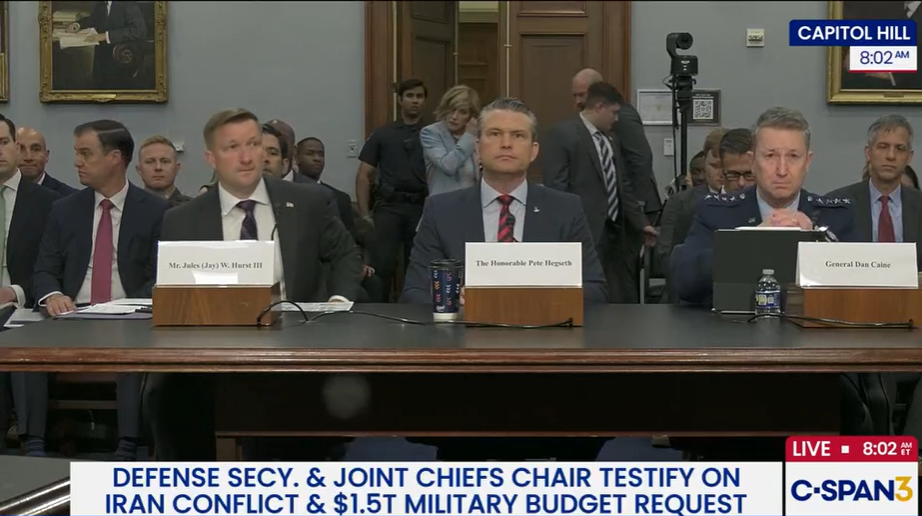
The FY27 appropriations process is now underway. Like FY26, it is expected to be slow and controversial. The House Appropriations Committee has marked up five of the bills and the House approved its first FY27 bill, the Military Construction-VA bill. The Senate Appropriations Committee is expected to mark up most of the bills in June and July beginning with the Commerce-Justice-Science, Agriculture and Legislative Branch bills on June 4. President Trump has proposed $1.5 trillion for national security programs, a proposed increase of $450 billon almost 42%. He has proposed that $350 billion of that be enacted through the reconciliation process.
In a Senate Appropriations Defense Subcommittee hearing on May 12, Senators McConnell (R-KY), Murkowski (R-AK), and Murray (D-WA) all raised concerns with this proposal. The President also proposes a 10% decrease in non-defense programs. Further complicating the FY27 appropriations process will be the eventual request for supplemental funding for the war in Iran. Defense Secretary Hegseth testified that the cost is at least $29 billion to replace ammunition and damaged aircraft. That estimate excludes the costs of repairing damaged facilities.
It is highly likely that most Federal agencies will operate under a continuing resolution from October 1 until after the mid-term elections. If the election results give Democrats enough seats to regain control of the House or Senate, that timetable could get pushed into February or March of 2027.