
January 26, 2026
FY26 Appropriations: Tech Funding in Commerce, Justice and Science Bill
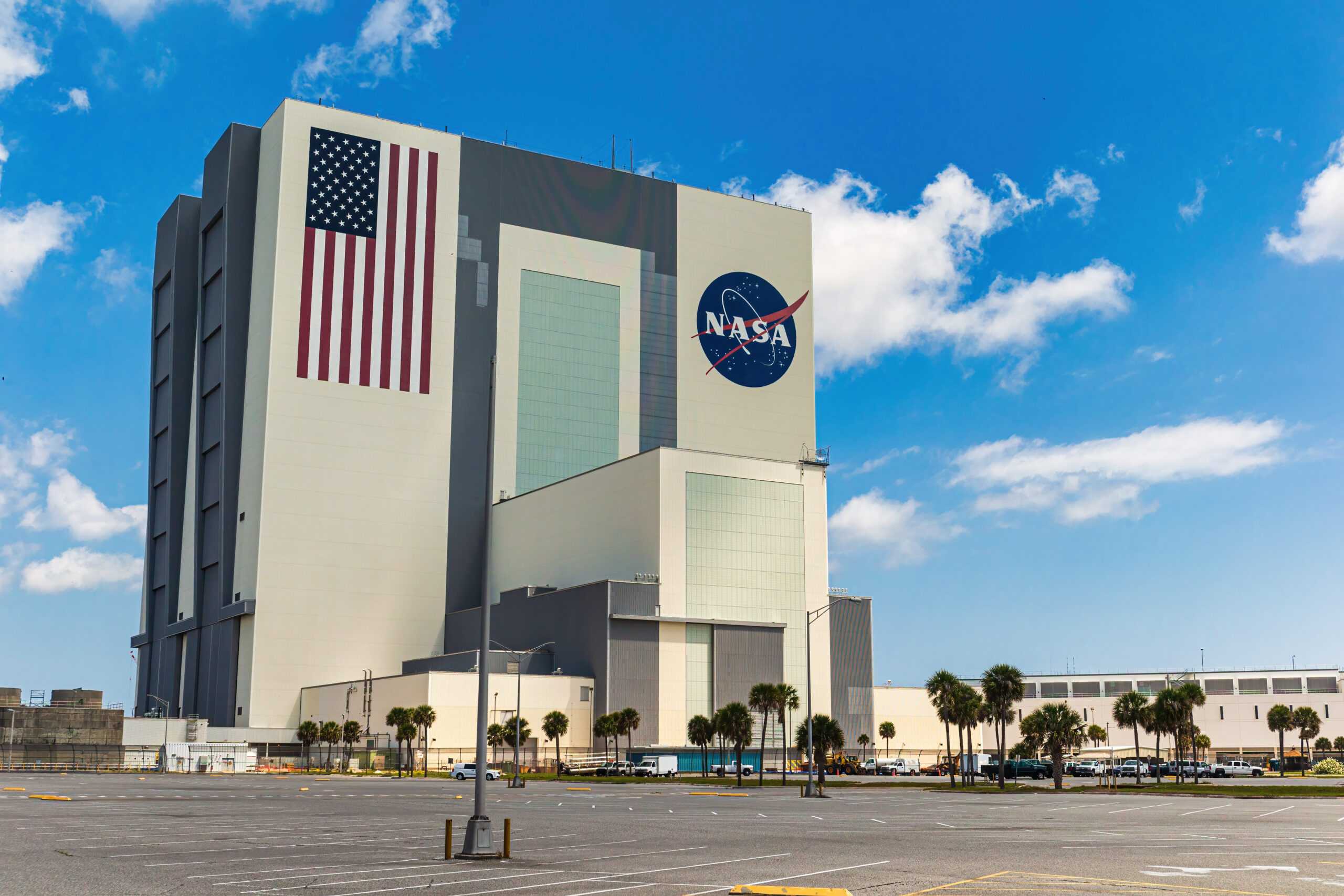
Congress has approved a compromise deal for the FY26 spending bill that covers the Departments of Commerce and Justice, National Aeronautics and Space Administration (NASA), the National Science Foundation (NSF), and related agencies, (the CJS bill). The text of the deal was released January 5 by the House and Senate Appropriations Committees and approved, with two other bills in a “minibus,” by the full House on January 8 in a robust, bipartisan 397-28 vote. The Senated voted 82-15 to pass the bill on January 15. A January 7 Statement of Administration Policy supported the legislation.
Since Trump’s FY26 Budget was released, FBIQ’s forecast predicted that Congress would drastically scale back the 22.6% reduction in non-defense funding he proposed, especially the elimination of programs with bipartisan support in Congress. House and Senate bill summaries cite the overall total for the CJS bill at $78 billion—$71.4 billion in civilian (nondefense) funds and $6.6 billion for defense activities, which is level with the FY25 spending level and $15 billion over the Trump budget.
Advancing the Technology-based Economy: Bolsters U.S. competitiveness by driving cutting-edge research, safeguarding sensitive technologies, expanding high-tech exports, and building regional innovation ecosystems that create jobs and attract private investment nationwide.
Senate Appropriations Committee Chair Collins (R-ME),
January 5
SCIENTIFIC AGENCY AND PROGRAM HIGHLIGHTS
National Institute of Science and Technology (NIST). The joint explanatory statement (JES) for the CJS portion of the agreement shows it includes $1.85 billion for NIST, $1.2 billion of which is for Scientific and Technical Research (STRS). This is an increase of $392 million over the FY25 level and $492 over the Trump budget. Congressional direction focused on Artificial Intelligence (AI) is for “no less than $55,000,000 for NIST’s ongoing Al research and measurement science efforts.” The report continues “up to $10,000,000 is to expand on NIST’s Al efforts through the U.S. Center for Al Standards and Innovation to advance Al research, standards, and testing.”
The Congressional agreement directs $ 175 million for the Hollings Manufacturing Extension Partnership (MEP) and does not allow reduction in the number of active MEP Centers. Further, it directs the allocation of at least 85% of MEP funding directly to MEP Centers “through base awards, competitive, or expansion award pilot programs.” Congress provides $400 million for Economic Development Assistance Programs, which was zeroed out in Trump budget. The total includes $100 million for public works, $41 million for Regional Technology and Innovation Hubs, and $50 million for Regional Innovation Program Grants (Build 2 Scale).
National Oceanic and Atmospheric Administration (NOAA). NOAA will receive $4.5 billion in direct funding for its Operations, Research, and Facilities account, $131 million over FY25 and $1.5 billion over the Trump budget request. In addition, NOAA received $540 million in FY26 in a final installment from the 2021 Infrastructure Investment and Jobs Act. Highlights include $677 million for National Ocean Service, of which $263 million is for Navigation, Observations and Positioning, and $115.5 million for coastal assessment; $1.1 billion for National Marine Fisheries Service (NMFS), which includes $715 million for fisheries science and management, with species data collection, surveys and assessment; $589 million for ocean and atmospheric research; and $1.3 billion for the National Weather Service (NWS), with $603.5 million of the total for analysis, forecasting and support and $180 million for science and technology integration.
Congress included several directives for NWS, including $30 million for the National Mesonet Program to expand weather observations, directs deployment of commercial aviation-based atmospheric data. NWS is set to receive $104 million in procurement funding, including $68 million for data processing services.
Other funding includes $45 million for Office of Oceanic and Atmospheric Research: Research Supercomputing/CCRI, $43 million for Systems/Services Architecture and Engineering (SAE) for the continuation of the commercial data purchase and commercial weather data pilot programs within the National Environmental Satellite, Data and Information Service.
National Aeronautics and Space Administration. NASA is funded at $24.4 billion, $400 million below the FY25 level and $5.6 billion over Trump’s $18.8 billion FY26 request. Of that amount, $7.3 billion is for science, $7.8 for exploration, $4.2 billion for Space Operations, $920 million for space technology, and $143 million for Science, Technology, Engineering, Mathematics (STEM). Congress directs $55.3 million for Commercial Satellite Data Acquisition (CSDA) and no less than $50 million on High End Computing Capability. The agreement includes $10 million for a Space Technology program Center for Robotics and Space Mobility (ROMO) to be established at the Goddard Space Flight Center. Finally, the conferenced bill addresses small businesses and asks NASA to continue “to obligate not less than 3.2% of its annual extramural research and development budget through awards to small businesses despite the current lapse in Small Business Innovation Research (SBIR) authorization.”
National Science Foundation. The agreement includes $8.75 billion for the NSF, of which $7.2 billion is for Research and Related Activities (R&RA). Addressing oversight, in addition to requiring a spending plan, as NSF allocates funds Congress directs NSF “to equitably distribute funding to support all basic research directorates within R&RA, as well as the Technology, Innovation and Partnerships Directorate.”
Within NSF, up to $200 million is provided for Regional Innovation Engines (NSF Engines and $30 million for the National Artificial Intelligence Research Resource (NAIRR) Pilot Program. Finally, the agreement funds Established Program to Stimulate Competitive Research (EPSCoR) at $250 million.
Bolsters our national security by: Supporting the American research enterprise to counter China’s increasing investments in basic research and technology development [and] Investing in emerging technologies, including artificial intelligence, quantum, and advanced manufacturing.
House Appropriations Committee Chair Cole (R-OK),
January 5
CONGRESSIONALLY-DIRECTED SPENDING (CDS)/COMMUNITY PROJECT FUNDING (CPF)
Within the total CJS bill, Congress included over $1.7 billion in project funding, also called CDS in the Senate or CPF in the House. Funding for such projects is currently restricted to non-profit entities with a clear nexus to the agency mission and the identity of the recipient must be disclosed in the member request. With last year’s full-year CR, FY25 CJS funding included no Congressional projects. For FY26, accounts with CDS/CPF funds include NIST Scientific and Technical Research and Services (STRS), NOAA, Department of Justice Byrne Grants and COPS Technology Grants, and NASA’s Security and Mission Services (SSMS). Check the link for a complete list of CDS/CPF projects.
OVERSIGHT
Asserting the “power of the purse,” every agency in the CJS bill is:
- Directed to follow the directions set forth in the act and the JES;
- Must provide 45-day advance notice of any Reduction in Force notices or personnel actions;
- Are prohibited from reallocation of resources or reorganize activities except as provided; and
- Must meet requirements for reprogramming requests, abide by decisions, and submit all reprogrammings by July
Further, any program, project, or activity listed in the report “shall not be subject to reductions or reprogramming without prior approval of the Committees.” Spend plans are required within 45 days of enactment of the spending bill. Finally, the timing supports meaningful budget planning: Appropriators must receive required agency spend plans for FY26 before they hold oversight hearings and prior to initial FY27 funding decisions when they mark up bills.
DELIVERING FOR SCIENCE
An old budget saying, “the President proposes, Congress disposes,” retains relevance as CJS FY26 appropriations finally came to a close after a record-breaking government shutdown. For FY26, the President proposed cutting agencies in the CJS bill by an average of 18%, with a range of 4% (Drug Enforcement Agency) to 100% (Economic Development Assistance and STEM Education programs). Science agencies, from NASA to NSF, would have been cut by 24%-57% if the Trump numbers had been adopted.
Although the CJS bill lacked bipartisan support as it moved through the House appropriations process, conference with the Senate brought out the art of compromise. Appropriators crunched numbers through December and negotiated a bill that earned bicameral and bipartisan support. In the House, the conferenced CJS bill (as part of a 3-bill minibus) received a whopping 397 votes, a level that no other complex legislation reached in 2025. Legislators got a hat trick: they avoided a full-year CR for three more bills, got $1.7 billion of Congressionally-directed funding for science, tech and law enforcement projects, and invested in core scientific agencies that are critical nationally and bring opportunities to every state and district.