
July 14, 2025
Trump’s Signs “One Big Beautiful” Reconciliation Bill into Law

After the House passed the Senate version of the reconciliation bill (H.R. 1, One Big Beautiful Bill Act (OBBBA)) on July 3rd by a vote of 218-214, President Trump signed the bill into law on July 4th. While there was skepticism of the Republican Congress’s ability to pass reconciliation, we have consistently projected the bill would become law by August. House Speaker Johnson (R- LA) and Senate Majority Leader Thune (R-SD) defied the odds and not only managed to pass the bill in their respective houses by razor thin margins but also achieved the President’s goal to deliver it to him to sign into law by July 4th.
The bill is broad-based, comprised of 10 titles and runs 869 pages. It also cements some key Trump and Republican priorities including:
- Permanently extending 2017 tax cuts;
- Adding new or increase tax reductions advocated by the President, including a reduction in taxes on income from overtime, tips, and increase the standard deduction for seniors;
- Providing $156.2 billion for national defense, including funding for the President’s golden dome (missile defense) proposal;
- Providing $202.8 billion to the Department of Homeland Security for border security, immigration enforcement, and the Coast Guard;
- Including mandatory spending reductions amounting to $1.4 trillion over 10 years, primarily through reductions in Medicaid, Supplemental Nutrition Assistance Program (SNAP), and student loan programs;
- Phasing out most tax and spending subsidies for green programs provided in the Inflation Reduction Act (IRA), a reconciliation bill passed with just Democratic votes and signed by President Biden; and,
- Increasing the statutory limit on the debt by $5 trillion.
OBBBA comes with a significant price tag. According to the Congressional Budget Office (CBO), the bill would increase the deficit relative to a current law baseline by $3.4 trillion over 10 years. Senate Republicans used a current policy baseline, which assumed the extension of 2017 tax cuts scheduled to expire in 2025, to show the bill reduced the deficit by $0.4 trillion over 10 years. In January, CBO projected that under a current law baseline, annual deficits would push the debt from $28.2 trillion (97.8% of gross domestic product (GDP)) in 2024 to $49.6 trillion by 2034 (117.1% of GDP) by 2034. This bill would increase that debt by over $3 trillion, pushing it to roughly $53 trillion (125% of GDP), well above the World War II peak level of debt of 106.1% of GDP.
The Administration argues that higher revenue from increased tariffs, its proposals to reduce discretionary spending, and regulatory actions will more than offset these costs. On tariffs, CBO has separately estimated Trump’s higher tariffs would boost federal revenues by $2.5 trillion over 10 years. The biggest factor in the budget outlook, however, is the economy. Despite concerns that tariff increases and the Federal Reserve maintaining higher interest rates to combat inflation would place a drag on the economy, the economy is still experiencing real growth, and the unemployment rate remains low at 4.1%. If the economy weakens and goes into a recession, that will boost spending and reduce revenues, which will further exacerbate rising deficits and debt, which are already on an unsustainable path.
OBBBA & FEDERAL PROCUREMENT AND GRANTS
Although the focus on the bill has been on taxes, Medicaid, IRA green credits, and deficits, the OBBBA provides significant amounts of multi-year funding for federal programs traditionally funded in appropriations bills, primarily in defense and homeland security programs, as well as increases in Federal Aviation Administration (FAA), National Aeronautics Space Administration (NASA), and Department of Energy (DOE) programs.
Chart I on page 14 lists sections in the bill that provide funding for programs that are sources for federal procurement and grant spending. Not all this funding is devoted solely to procurement and grants. For example, section 90002 provides a total of $12 billion to U.S. Customs and Border Protection. This amount is roughly split between personnel ($6.2 billion) and vehicles and facilities ($5.9 billion). A similar case arises with the section 100053 appropriation for Immigration and Customs Enforcement. It provides a total of $29.8 billion for several purposes, including personnel, information technology, facility upgrades, and fleet modernization, but does not allocate the total appropriation.
Since OBBBA provides funding on a multi-year basis, particularly in the case of procurement and grants, these funds are likely to be obligated and spent over a period of years. The third column of the chart provides the total amount of funding provided in each section of the bill. It generally takes agencies a longer time to obligate and disburse funds for procurement and grant programs. CBO develops estimates of how quickly agencies will expend (outlay) for funding provided in legislation. The last column displays CBO’s estimate of the percentage of funds that will be expended (outlayed) in FY25 and In most cases, only a small percentage of the funds will be expended through FY26.
IMPLICATIONS FOR THE FY 2026 APPROPRIATIONS PROCESS
Unlike this reconciliation bill, appropriations bills can be filibustered in the Senate. Sixty votes are required to overcome a Senate filibuster. That gives Senate Democrats leverage in the appropriations process. However, the enactment of OBBBA reduces two key points of leverage for congressional Democrats.
In past appropriations negotiations, Democrats insisted on parity between defense and non-defense funding increases. In addition, they opposed appropriations for border wall construction and proposed to reduce funding for Immigration and Customs (ICE) enforcement and detention capacity. OBBBA provides $156 billion in funding for defense and $178 billion for border security and immigration activities that are traditionally funded in appropriations bills, which complicates the FY26 appropriations process. In addition, the tax title extended some business tax provisions that have been the subject of bipartisan negotiations to extend expiring tax provisions.
In the past, legislation to increase the debt limit has frequently been accompanied by bipartisan two-year appropriations topline budget agreements. By increasing the debt limit by $5 trillion, OBBBA also removed another point of potential leverage for congressional Democrats in the budget and appropriations process.
With the FY26 appropriations process already significantly delayed by the late administration budget submission, the House moving partisan appropriation bills in line with the President’s request to make major reductions in non-defense spending, and no topline agreement in the Senate for FY26 appropriations, the Congress is almost certain to enact a short-term continuing resolution by October 1 and, like FY25, it will probably fall back to a full-year CR for FY26 (though likely with more congressional direction on funding allocations). While Democrats may have lost some key points of leverage, they will have opportunities to influence the budget and appropriations process. In June, the Federal Emergency Management Agency (FEMA) projected the Disaster Relief Fund (DRF) will be depleted by September 2025. The recent Texas floods and a bad hurricane or wildfire season could accelerate the need for emergency supplemental appropriations.
Another point of leverage are potential across-the-board reductions in certain mandatory spending programs in early 2026. Under the Statutory Pay-as-you-go Act of 2010, the Office of Management and Budget is required to issue across-the-board mandatory spending reductions (known as a “sequester”) to offset the amount mandatory spending or tax legislation increases the deficit. Since the OBBBA would increase the deficit $3.4 trillion, Most mandatory spending is exempt from sequestration, but Medicare is subject to up to a 4% reduction. OMB is required to issue a sequester order (across-the-board spending reductions) within 14 days of the end of the session (likely in January 2026). According to May 2026 analysis by CBO, that sequester order would reduce Medicare spending by $45 billion in FY26. Since the law’s enactment in 2010, Congress has always acted to nullify Pay-as-you-go act sequesters, but that requires a change in law and that gives Democrats potential leverage.
Congressional Republicans, particularly in the House, have been supportive of President Trump and fallen in line to support his legislative priorities and withheld criticism of his executive budget actions. They will be reluctant to publicly criticize him or oppose him going forward.
Frustration among Republican members of the appropriations committees surfaced during recent hearings. Complaints include the Trump Administration’s withholding (impounding) appropriated funds, delaying the submittal of spending plans and congressional budget justifications, and the reliance on CRs that give the Administration greater discretion over the allocation of funds at the expense of the Congress. To date, Republicans have limited their complaints to the delay in the submittal of congressional budget justifications and the lack of detailed information on the President’s FY26 budget request during hearings.
OBBBA included provisions that indicate potential Republican concerns with the lack of transparency from the Trump Administration on the budget. The Senate Armed Services Committee initially included a provision in its reconciliation legislation that required DOD to submit quarterly spend plans for the funding they received in the bill and included a penalty if DOD failed to provide the reports as required in the bill. Although that provision was dropped before the Senate passed it, the provision illustrates frustration with the lack of transparency from the administration (the bill did include provisions requiring a spend plans for military construction projects and the FAA that survived and were included in the bill that became law).
MORE RECONCILIATION BILLS TO COME?
On July 6, in response to a question about conservative House Republicans wanting additional spending reductions, Speaker Johnson said the House was planning to do a second reconciliation bill this fall and possibly a third reconciliation bill in the spring of 2026. That will require the House and Senate to first adopt a FY26 budget resolution to trigger a reconciliation bill this fall and a FY27 budget resolution in early 2026 to trigger a third reconciliation bill, amidst an election year. Despite the Speaker’s extraordinary success in passing partisan legislation with only a 3-seat Republican majority, adoption of another reconciliation bill (or bills) this fall seems at best a long shot.
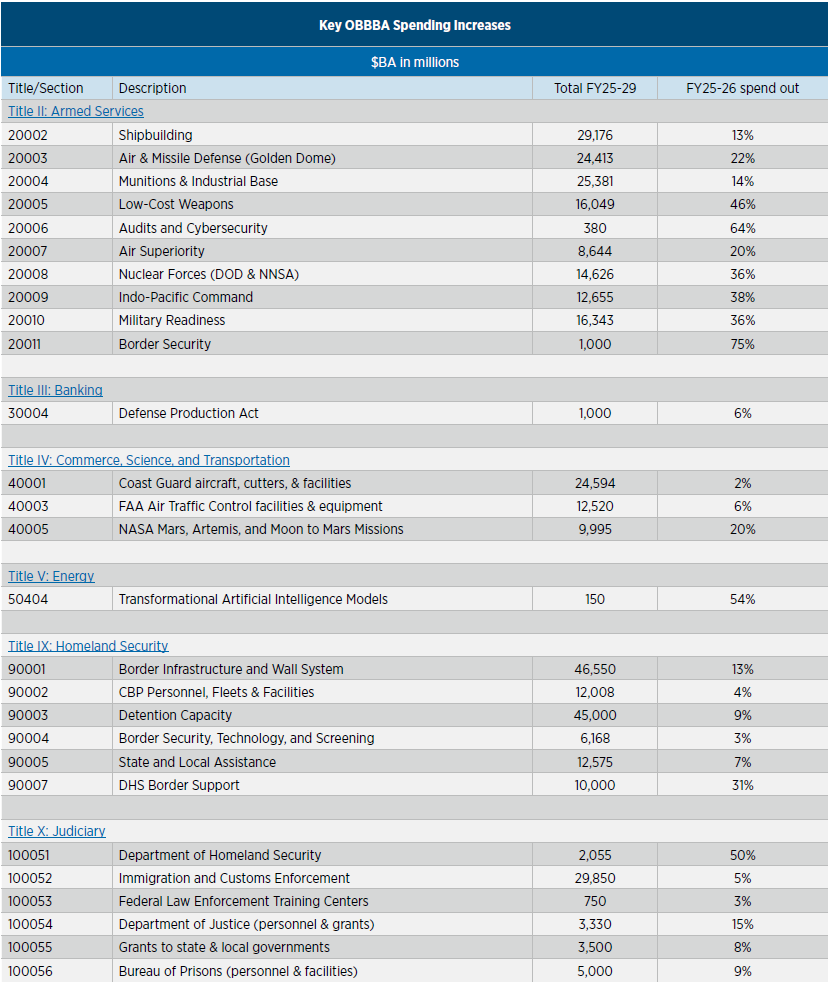
Chart I. Sources: Congressional Budget Office and FBIQ. Note: The final Senate-passed bill that became law included a few modifications that are not included in the links to legislative text above.